
Get in touch with us for manufacturing ERP software.
Contact Us Now

Sonal Narkhede
ERP Expert | Founder & CEO at Noetic Labs


A factory can run two shifts, keep its machines busy and still struggle to deliver orders on time. The store may show enough stock, but production keeps asking for material. The production report looks fine, yet the actual output tells a different story.
These situations are more common than many people think. Some of the biggest challenges in manufacturing industry do not come from a lack of machines or workers. They come from gaps in planning, stock records and communication between departments.
From tracking work-in-progress to knowing actual stock levels, manufacturers face questions that are difficult to answer without reliable, up-to-date information.
Let's look at five questions that can help manufacturers understand what is going wrong:
Busy machines do not always mean smooth production. One delayed operation, machine breakdown or missing component can hold up several orders.
For example, a component may be ready for assembly, but the next machine is already occupied with another job. The team keeps working, yet the delivery date moves further away.
A connected production plan helps managers check machine capacity, job priorities and material availability before changing schedules.
This question often creates confusion between the purchase and stores teams.
The system may show 500 units, but 300 could already belong to another order. Some material may be awaiting quality approval, while the rest sits in a different location.
Manufacturers need to know not just how much stock they have, but how much they can actually use.
Accurate inventory records help teams avoid unnecessary purchases, reduce material shortages and make better purchasing decisions.
Raw material enters production, but finished goods may take days or weeks to reach the warehouse. During this time, some jobs wait for the next operation, some need rework, and others remain incomplete.
Without proper tracking, managers may struggle to answer a simple question: Which stage is holding up the order?
Tracking work-in-progress, material consumption and production stages helps businesses see where time and money remain tied up.
Many factories still depend on paper records, spreadsheets or updates entered at the end of a shift. By the time a manager sees the report, the production situation may have changed.
This creates a gap between what the dashboard shows and what is happening on the shop floor.
A connected system can provide timely updates on production output, pending jobs and inventory movements. For direct machine data, manufacturers may also need suitable sensors or shop-floor system integrations.
An order may look profitable on paper, but extra material usage, overtime, scrap and rework can reduce the actual margin.
If teams record these costs separately, finding the reason becomes difficult. Managers may see the final numbers without knowing which production activity caused the difference.
Connecting production, purchasing, inventory and costing records helps businesses compare planned costs with actual costs and identify areas that need attention.
No. of Challenges
No. of Difficulties
ERP Solution
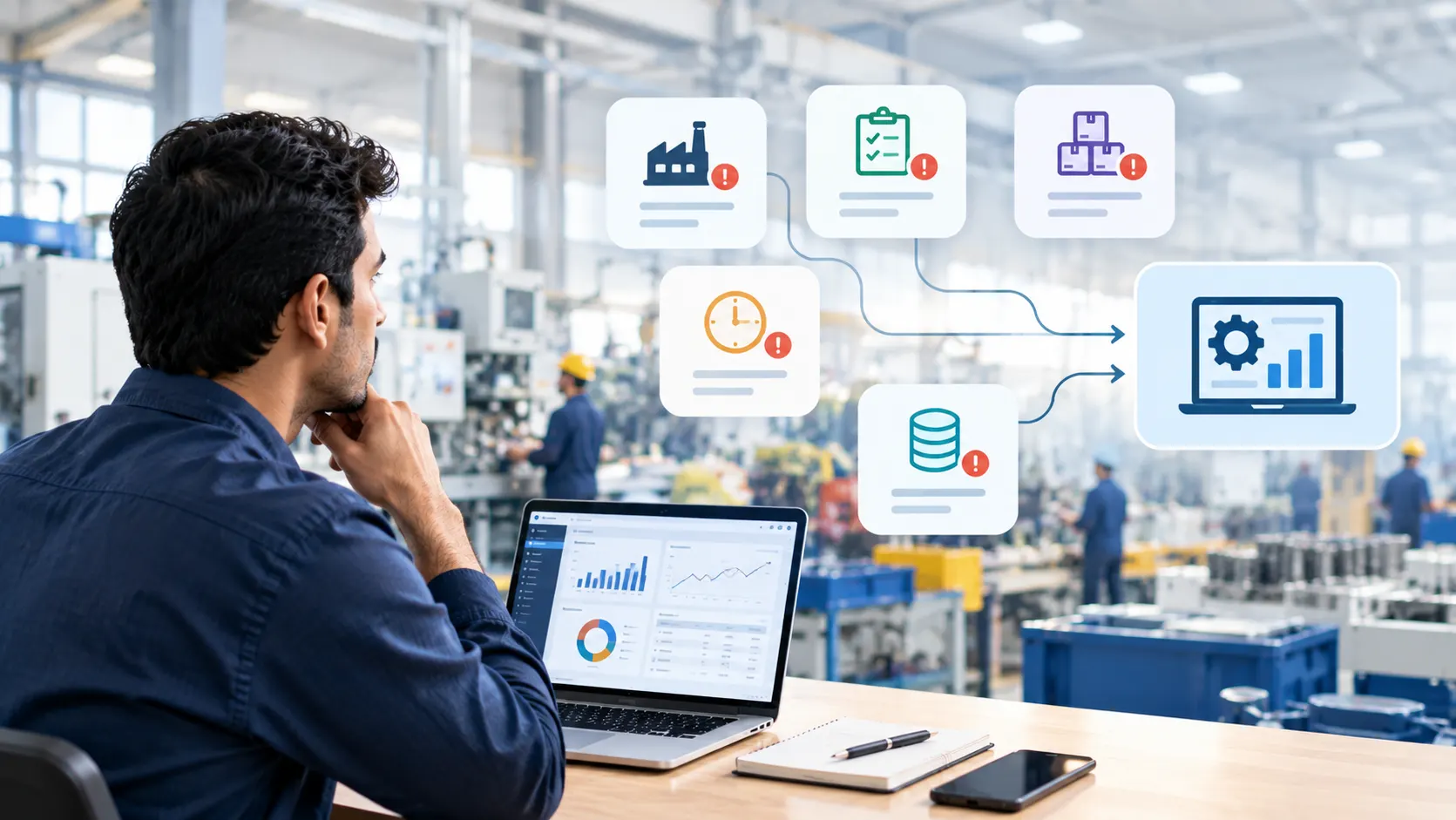
These challenges in manufacturing industry often share one underlying issue: different departments work with different information.
Manufacturing ERP software connects important business activities, including production planning, inventory, purchasing, quality and costing. Teams can work with shared records instead of chasing updates across multiple files.
Suitable ERP software for manufacturing industry can also help businesses track material requirements, follow production orders and understand delays before they affect more deliveries. Results depend on proper implementation, accurate data and suitable integrations.
Choose suitable ERP software for manufacturing industry. Choose Orbit ERP.
You don't always need more machines or longer shifts to improve production. Sometimes, your team needs a clearer picture of what is happening across the factory.
Noetic Labs helps businesses assess technology solutions around their operational needs. Get in touch with us today and how a connected manufacturing system could support your production and inventory processes.
Book your free consultation for customized ERP solutions tailored to your manufacturing business needs. Get the best ERP to overcome the biggest challenges in manufacturing industry.
ERP Expert | Founder & CEO at Noetic Labs
Copyright © Noetic Labs 2026 – All Rights Reserved